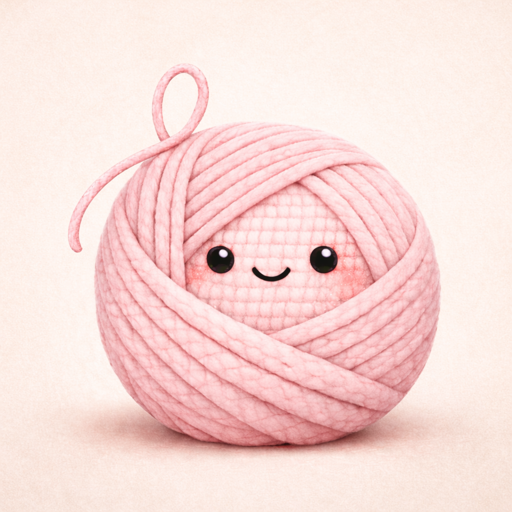
 Hooked
Amigurumi — the Japanese art of crocheting small stuffed creatures — looks advanced and is secretly one of the best beginner specialties in crochet. Projects are small, finish fast, and use the same handful of stitches over and over. If you can single crochet, you're four short lessons away from your first owl.
What makes amigurumi beginner-friendly
- Only 4 techniques: single crochet (sc), increase (inc), decrease (dec), and the magic ring (MR).
- Small projects: a keychain-sized animal takes an evening or two, not a month.
- Mistakes hide: uneven tension that would show in a scarf disappears in a stuffed sphere.
Supplies
- Worsted-weight cotton or acrylic yarn in 2–3 colors
- A hook one or two sizes smaller than the yarn label suggests (tight fabric keeps stuffing from showing)
- Fiberfill stuffing, a yarn needle, stitch markers, and safety eyes (optional — you can embroider eyes instead)
The one technique to practice: the magic ring
Nearly every amigurumi starts with a magic ring (MR): an adjustable loop you crochet your first round into, then pull tight so there's no hole in the center. It feels fiddly for the first five attempts and automatic by the tenth. If it fights you, chain 2 and work your first round into the second chain — a legitimate substitute while you learn.
How to read amigurumi patterns
Amigurumi patterns are worked in continuous rounds and lean heavily on repeat notation:
- “R1: 6 sc in MR” — six single crochets into a magic ring.
- “R2: inc x 6 [12]” — increase in every stitch; 12 stitches total.
- “R3: (1 sc, inc) x 6 [18]” — alternate one sc and one increase, six times; 18 total.
The bracketed number at the end of each round is your checkpoint — count every round, because in a sphere a miscount compounds fast. (Full notation breakdown in our pattern-reading guide.)
Why counting matters more in amigurumi than anywhere else
Rounds of amigurumi all look identical — there's no row texture to read back like in flat crochet. Lose track of whether you're on round 14 or 15 of a shaped body and the proportions drift. This is exactly the project type where a reliable counting system stops being optional. Use a stitch marker in the first stitch of every round, and a counter for the round number.
Good first projects
Start with a single-piece creature (a sphere with a face — jellyfish, pumpkin, little ghost) before anything with sewn-on limbs. A small owl or keychain animal is the classic second project: two colors, simple shaping, one evening.
Quick answers
Is amigurumi good for beginners?
Yes — most amigurumi uses only single crochet, increases, decreases, and a magic ring, worked in small fast projects. It's one of the most beginner-friendly specialties in crochet.
What does (1 sc, inc) x 6 mean in amigurumi?
Work 1 single crochet, then an increase (2 sc in the next stitch), and repeat that pair six times around. The number in brackets afterward is the stitch total you should end the round with.
Why does my amigurumi have holes?
Your hook is too large for your yarn. Go down one or two hook sizes so the fabric is tight enough that stuffing can't peek through.